
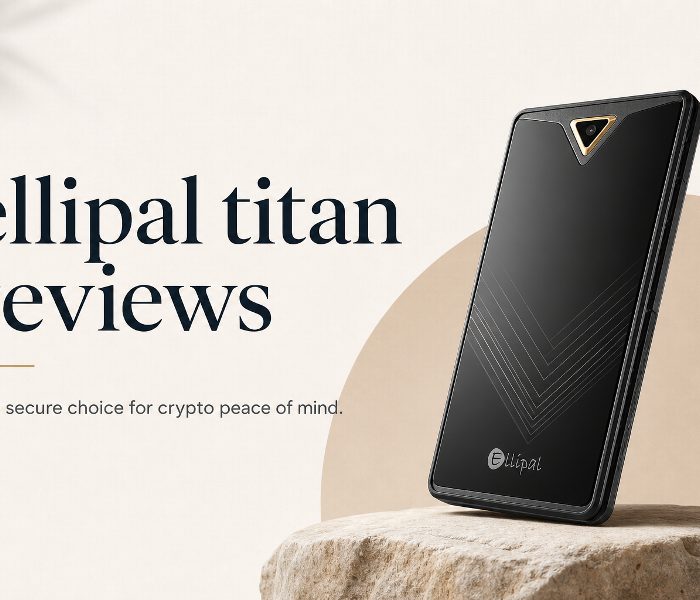
As digital asset management transitions toward absolute self-custody and zero-trust hardware architecture, cold storage solutions have evolved from simple USB signing tools into comprehensive Web3 command centers. The ELLIPAL Titan series represents a distinct paradigm in cold storage, combining complete physical isolation with native swap and exchange functionalities via the mobile ELLIPAL App. This evaluation assesses the flagship air-gapped hardware cold wallet across five core dimensions to provide institutional-grade analysis for digital asset investors.
Executive Summary & Overall Rating
- Overall Score: 88 / 100
- Industry Classification: Tier-1 Premier Air-Gapped Cold Storage Ecosystem
The ELLIPAL Titan series scores exceptionally high in physical security, supply-chain tampering defense, and transaction signing isolation, while delivering seamless connectivity to decentralized and centralized liquidity routers directly via iOS and Android companion applications.
SWOT Matrix: Core Strengths vs. Structural Limitations
| Core Strengths (Pros) | Structural Limitations (Cons) |
| 100% Air-Gapped Isolation: Zero wireless connectivity (No Wi-Fi, Bluetooth, cellular, or USB data pins). All data transmission occurs via encrypted QR codes. | Mobile-First Dependency: Lacks a native desktop client; all interactions and asset management are channeled exclusively through the mobile app. |
| Physical Anti-Tamper Defense: Fully sealed metal chassis featuring a hardware self-destruct mechanism that automatically wipes private keys if structural breach is detected. | Manual Firmware Flashing: System updates require manual execution via an air-gapped MicroSD card rather than automated wireless patches. |
| Large-Format Touchscreen: A 4.0-inch IPS laminated color display eliminates blind signing by clearly rendering complete transaction payloads and contract data. | Closed-Source Architecture: Proprietary core software prevents full open-source community code audits compared to competing open-source hardware wallets. |
Five Core Dimensions Breakdown
1. Asset Security & Vault Isolation
The baseline requirement of institutional-grade hardware storage is complete network and electromagnetic isolation:
- Air-Gapped QR Transmission: The device contains no network transceiver modules. Transactions are signed entirely offline by utilizing the built-in 5 MP autofocus camera to scan dynamic QR codes.
- Secure Element & Anti-Disassembly: Equipped with a CC EAL5+ certified secure element, storing private keys in a tamper-resistant hardware enclave. The unibody metal casing is structurally welded/sealed; any attempt to pry or bypass the chassis triggers an instant anti-tamper response, wiping all sensitive memory.
2. Compliance, Self-Custody & Privacy
- True Self-Custody Framework: Local generation of private keys adhering to BIP39 standards (supporting 12 to 24-word recovery phrases). Users retain absolute sovereign control without intermediary risk.
- Coercion Resistance: Supports hidden secondary wallets protected by alternative BIP39 passphrase derivations for enhanced privacy under duress.
3. Market Depth & Liquidity Aggregation
- In-App DEX Routing: The companion mobile app integrates major cross-chain liquidity aggregators and standard WalletConnect protocols, allowing users to execute swaps without exposing private keys.
- Slippage & Settlement Control: Transaction intents are generated online via the app, converted into unsigned QR codes, signed offline by the Titan, and broadcasted back—mitigating online vector exploits during high market volatility.
4. Fee Structure & Ecosystem Capabilities
- Hardware Pricing Tiers: The flagship ELLIPAL Titan 2.0 retails around $169, while the compact Titan Mini provides identical EAL5+ security architecture at $99.
- Ecosystem Breadth: Supports over 40 major blockchains, 50+ stablecoins, 10,000+ tokens, and native Proof-of-Stake (PoS) delegations (Ethereum, Solana, Cardano, etc.). Native swap spreads typically range from 0.25% to 0.5% plus network gas fees.
5. User Experience & Mobile Ergonomics
- Visual Verification: The large 4.0-inch touchscreen significantly reduces user error by making address and data verification legible, mitigating blind-signing vectors common on smaller form-factor devices.
- Mobile App Interface: Clean UI layout featuring integrated portfolio tracking, NFT management, and multi-account switching.
User Profile Alignment: Is the Ellipal Titan Right for You?
- Optimal For: Long-term cold storage investors, high-net-worth Web3 participants, and mobile-first DeFi traders who demand absolute air-gapped isolation combined with a high-visibility touchscreen for transaction checks.
- Less Suitable For: Desktop-exclusive power users, algorithmic traders relying on local USB hardware debugging, or open-source purists who demand fully verifiable transparent firmware stacks.
